
Reading A Course in Miracles can feel like uncovering a treasure chest of wisdom, only to realize some of the keys don’t fit.
At least not right away.
So you’ve studied the lessons, read the text, and it’s still not clicking.
You’re not alone.
Most readers encounter moments of profound insight followed by confusion, doubt, or the aching feeling that they’re missing something crucial.
The good news is, this post is for you, the seeker who has found. The one who wants to live ACIM’s teachings but is unsure how to move past the sticking points.
Let’s explore these together, but in a more practical way.
Table of Contents (Questions)
- If the world is an illusion, why does it feel so real and painful?
- How can I genuinely forgive someone when the hurt feels so deep and personal?
- What does it mean to “look past the body” when interacting with others?
- How can I discern between the voice of the ego and the voice of the Holy Spirit in my mind?
- What does it look like to live without judgment in a practical sense?
- Why does ACIM use Christian terminology if it’s not a religion?
- If God didn’t create the world, who or what did?
- How do I practice “choosing peace” when I’m in a situation that feels overwhelming or unjust?
- Can I truly ever let go of fear and guilt, or is it a lifelong struggle?
- What does ACIM mean by “special relationships,” and are all romantic relationships problematic?
- How can I love someone unconditionally while setting boundaries?
- If I don’t believe everything in ACIM, can I still benefit from it?
- What does it mean to give “true perception” to another person?
- How can I understand “time” as ACIM describes it, especially the idea that everything is happening now?
- Why do I sometimes feel more frustrated or lost after trying to apply ACIM principles?
- How can I reconcile the idea that the world is a classroom with its apparent injustices and suffering?
- How do I handle relationships with people who seem to embody the ego?
- What does it mean to accept the atonement for myself, and how will I know when I’ve done it?
- Why do I resist the peace and joy that ACIM promises?
- Is it possible to truly awaken while still engaging with the demands of the material world?
1. If the world is an illusion, why does it feel so real and painful?
This isn’t just one important question; it’s two. 😂
Let’s address the world’s “realness” and “painfulness” one at a time.
Why does it feel so real?
A year ago, I celebrated a friend’s birthday at a Virtual Reality playhouse.
In a large open room with padded walls, we were split into 2 teams.
We were each given a harness with vibration sensors, a toy gun, and a headset.
Once the game started, we were immersed in a world almost indistinguishable from the one we call “real.”
We knew it was fake, but the new world was so compelling.
There were obstacles in our way.
“Enemies” to destroy.
And paths that twisted and turned in different directions.
When we fired at our “enemies,” our sensors vibrated.
Also, when we were “hit,” the sensors let us feel it.
At one point, our team had to cross a very narrow bridge or fall to our virtual deaths.
People were shaking.
Even though everyone knew it wasn’t real, we were scared out of our minds.
After the game ended and we took off our headsets, we couldn’t believe how convincing it all felt.
It wasn’t just the visuals. The staff added to the experience by blowing fans in our faces when we were near helicopters, for example.
It felt real because it was designed to feel real.
The realness of a fake world is exactly what we’ve signed up for – a fully immersive experience with dangers, twists, love, drama, and everything in between.
When I say “signed up for,” I don’t mean before you were born.
I mean right now.
Every moment, you decide what each situation and interaction means.
You’ve practiced these decisions for so long, you’ve forgotten that you’re the one making them.
They’ve become habits. And when certain “games” load, you respond automatically.
But here’s the key: once you choose again, your world will follow, reflecting your new choices.
So why does it feel painful?
This is an easy question for me to answer. Well, for myself.
But for you? That’s seemingly more difficult.
Pain isn’t a universal experience. That’s your first clue it isn’t real.
What one person calls pain, another might call pleasure.
What wounds one heart may delight another.
In other words, pain is a decision.
Consider this: Someone behaves in a way you don’t like.
If you’ve decided their behavior is “wrong,” simply being in their presence can cause discomfort.
But here’s the truth: the discomfort doesn’t come from the person.
It comes from the decision you made about them … and their actions.
You’ve assigned pain its value.
The same way decisions become habits is the same way mental pain manifests itself as physical pain.
Simple cause and effect…but more on this in Question #2.
2. How can I genuinely forgive someone when the hurt feels so deep and personal?
The short answer: You can’t.
Not while you allow the hurt to feel so deep and personal.
Let me ask you something. Would you let one meal feed you for the rest of your life, even if it made you sick the first time?
Think about that.
Of course, the answer is no.
So why do it with moments from the past?
Someone hurt you. In that moment, the pain was real. It happened.
But why let that single moment linger?
Why replay it, carry it, and hold it as if it defines your entire existence?
There’s only one “logical” reason you would…
You value the pain somehow.
It gives you something.
Maybe it gives your life meaning or importance.
Maybe it’s become a tool for gaining sympathy, manipulating with guilt, or even justifying your own perspective.
If you didn’t value it in some way, you’d let it go quickly.
You would not make monuments and statues to its worthlessness.
Forgiveness is this realization.
It’s the moment you recognize you’ve been carrying something you were meant to leave by the wayside.
When you let go of that scenario, act, or circumstance, something shifts.
You stop seeing through the eyes of a wounded individual.
Happy people see happy things. Wounded people see conflict.
So ask yourself: How much is this pain worth to me?
Then listen to my song Let Go.
Did you share it too?
I mean, you don’t have to. It’s fine, it’s fine. I forgive you.
As you can see from this example, you didn’t even do anything that needed forgiveness.
And over time, you’ll see that neither did they.
Don’t let that stop you from choosing again.
The choice is always yours: keep the story alive, or let it dissolve into the nothingness from which it came.
3. What does it mean to “look past the body” when interacting with others?
I’ve been getting new insights to this question.
But let’s start at the beginning.
Since birth, we’ve been trained to recognize differences by defining things.
Parents often ask, “What’s this? And what’s this? What sound does this make?”
With every right answer, we limit what we see.
We shrink things to fit the size of our definitions, at least from our perspective.
Take roaches, for example.
You may have been told they’re dirty, nasty creatures.
Now, whenever you see one, your mind leaps to disgust, and you react unpleasantly.
But what if I told you some cultures view roaches as a great spiritual sign?
To them, a roach represents transformation, cleansing, renewal, and resilience.
You might respond, “It’s too late. They’ll never mean that to me.”
And so they won’t … until you loosen the limitations you’ve placed on them.
People are no different.
You’ve learned to define others based on their age, race, clothing, accent, body language, and countless other cues.
And so, your interaction—or lack of it—becomes a reaction to their body.
You see them as a body.
You treat them as a body.
But when you look past the body, something changes.
You see possibilities.
You see God’s Love.
You see them as innocent, childlike, and filled with divine potential.
The inner Christ in you calls forth the inner Christ in them.
This “stranger” becomes a living representation of God.
And where God is present, peace follows.
To look past the body is to see your own peace reflected, assuming you’re bringing peace to the forefront.
It’s a choice.
One that changes everything.
Earlier, when I said new insights have arisen about this, I realized the likeness of energies.
So throughout my life, many people have reminded me of others.
Not in looks, but in energy.
But I could never prove it. Even when someone physical would leave my life out of circumstance, it’s like someone of a like energy would fill that void, but in a new way.
For example, my father’s energy would show up in a good friend. My crush’s energy would show up in a mentor.
I have countless examples of this as well. And I’m sure if you searched your mind, you would find the same.
So what if these “energies” are more connected than we realize? What if they are the same spiritual body?
But that’s beyond the scope of this article. Let’s move on.
4. How can I discern between the voice of the ego and the voice of the Holy Spirit in my mind?
There are clear ways to distinguish the ego’s voice from the Holy Spirit’s.
Here’s how they differ:
Ego’s Voice
- Loud
- Leaves you feeling anxious or frightened
- Demands something in return for helping
- Urgent
- Suggests attack thoughts
- Retaliates when it feels threatened
- Feels disrespected
- Craves worship
- Harsh
- Dishonors others
Holy Spirit’s Voice
- Gentle
- Adds joy and peace to your experience
- Gives freely, adding to love forever
- Patient
- Suggests thoughts of love and oneness
- Wants to share and heal
- Feels loving, no matter what
- Lifts you up
- Kind
- Honors All
But recognizing the difference isn’t the most important part.
What matters most is that you’re checking for the voice at all.
For many, the ego’s voice runs unchecked.
It’s loud. Persistent. And rarely questioned.
By simply pausing to examine your thoughts, you disrupt the ego’s dominance.
In that pause, you create space for truth to enter.
So, make it a habit.
Keep checking in. Keep questioning.
And don’t forget to invite the Holy Spirit to the party.
Because where love is present, fear cannot.
And if you want more help, reach out to me for a coaching session.
5. What does it look like to live without judgment in a practical sense?
Living without judgment is one of the most freeing practices you can embrace.
It starts with a simple realization: not everything needs your input.
In fact, nothing does.
When you hear something good or bad, your first reaction will be no reaction at all.
So-called “bad news” won’t trigger a flurry of thoughts.
Instead, it’s just news.
You’ll find yourself untethered from the world as you once knew it.
Here’s what happens next:
- Others open up to you. People will share more because they no longer fear your judgment.
- Joy sneaks into the small moments. You’ll begin to enjoy the “little” things just as much, if not more, than the grand ones.
- Life feels simpler. Without judgment clouding your mind, you’ll experience more love, more peace, and more clarity. More, More, AND MORE!
Without the weight of judgment and its accompanying emotions, your senses sharpen.
You’ll feel things on a deeper level than ever before.
You’ll engage only with what calls to you, rather than feeling compelled to react to everything.
Bad news becomes just news.
Good news, the same.
You reclaim your choice.
And then there’s the revelation.
When you stop constantly defining and limiting everything, you open yourself to possibilities.
You’ll pursue what fills you up in each moment without hesitation.
You’ll feel almost childlike in your curiosity and joy.
But this time, you’ll have the permission of an adult to follow your desires freely.
Living without judgment doesn’t just look peaceful; it is peaceful.
It’s joyful. Love-filled. Adventurous.
And it’s waiting for you to say YES.
Yes?
6. Why does ACIM use Christian terminology if it’s not a religion?
Some versions of A Course in Miracles include the Urtext – extra notes intended specifically for Helen Schucman and William Thetford, the original scribes of the Course.
In these notes (if I recall correctly), Christian terminology was described as a deliberate choice.
Why?
To communicate its teachings within a familiar framework for its primary audience.
While ACIM is not a religion and does not advocate for any specific tradition, it uses Christian terms to reinterpret and redefine concepts that may have been misunderstood or are no longer useful within traditional religious contexts.
It reimagines words like:
- God
- Jesus
- Holy Spirit
- Atonement
- Forgiveness
- Sin
- Crucifixion
- The Lord’s Prayer
ACIM seeks to strip these terms of fear-based thinking and restore them to their original, loving intent.
This approach makes A Course in Miracles resonate with individuals from a wide range of spiritual backgrounds:
- Catholics, Baptists, Methodists, Lutherans, Presbyterians, Pentecostals, and Evangelicals
- Non-denominational Christians and Quakers
- Members of the Eastern Orthodox and Oriental Orthodox Churches, including Coptic and Armenian traditions
- Restorationist groups like Jehovah’s Witnesses, Seventh-day Adventists, and Mormons
- Anabaptists like Mennonites and Amish
- Charismatics and independent spiritual seekers
Its teachings also appeal to those exploring metaphysical or non-denominational perspectives on Christian concepts.
But it doesn’t stop there.
I share ACIM principles often in my personal life because they reflect who I’ve become. And I’m continually amazed by how people of different faiths resonate with these truths.
Taoists, Muslims, Buddhists, Bahá’ís, and Hindus have all recognized its alignment with the wisdom they practice.
I believe that with an open mind, followers of Judaism, Sikhism, Jainism, Zoroastrianism, and Indigenous traditions would also find common ground in its teachings.
And the only reason I’m listing each of these faiths in this article is that it might boost the Google ranking because of all these keywords. 😆
And of course, because truth, at its core, transcends all labels.
It’s universal.
It’s eternal.
And it speaks to the heart of us all.
7. If God didn’t create the world, who or what did?
Good question.
There are countless stories about how the world was formed.
But here’s the truth…
None of them matter.
First, let’s clarify: when you say “the world,” what do you mean?
Your country? The earth? The galaxy?
All of these are concepts, ideas, or decisions that exist in your mind.
As A Course in Miracles (ACIM) teaches, by your own definition, you are the world.
But there’s more.
ACIM speaks of two worlds: the illusory world and the real world.
- The illusory world is built on fear.
- The real world reflects love and truth.
Since fear cannot truly exist, not universally or eternally, a fear-based world isn’t real.
And what isn’t real doesn’t exist.
If it doesn’t exist, it can’t be created.
So, who’s creating this illusory world?
I know, you don’t want to answer, but I’ll ask again.
Who is creating this illusory world?
You are.
By nature, you are a creator. But instead of accepting the real world, you’ve chosen to create an illusory one.
This is one of ACIM’s key lessons:
You choose to maintain the illusion.
The real question isn’t “who created the world?” It’s “why are you still creating this one?”
Now let’s add time to the equation.
The past doesn’t matter.
It’s gone.
You only ever interact with the now.
But when you bring the idea of the past into the present, you distort reality.
You see what could never be.
Here are your choices, which is really just one choice:
- See the truth by staying rooted in the now.
- Imagine a past that never existed and use it to filter your present.
In the first, you accept your existence as enough.
In the second, you create yet another illusion.
Either way, you’re a creator. But only one path leads to peace.
Will you choose truth or continue imagining?
8. How do I practice “choosing peace” when I’m in a situation that feels overwhelming or unjust?
First, remember this:
You are the one feeding the idea that the situation is overwhelming or unjust.
The situation itself exists for one reason: to help you practice.
So when you ask, “Why is this happening to me?” Get excited because it’s practice time!!
A peaceful person isn’t someone who’s only calm in moments of peace.
A peaceful person is someone who chooses peace even when others see chaos or conflict.
Story Time:
Let me revisit the past for a moment to share the time I fully accepted A Course in Miracles.
The year was 2019. I had been studying ACIM heavily for at least six months.
It filled the gaps in my understanding and felt like the truth I had been searching for.
I was eager to practice its concepts.
In fact, I looked forward to moments of conflict, because they were my chance to practice peace.
But life has a way of surprising you, don’t it?
Even with all my training, there were plenty of times when I chose chaos first.
But here’s the story of a time I chose correctly and it benefited everyone involved.
The Basketball Incident
I was playing basketball, letting my ego stretch here and there. Then the game got heated.
In a moment of competitiveness, my elbow accidentally came down on an opponent’s head.
It was an honest mistake.
But tensions had been building all game with trash talk flying back and forth. And I’m pretty good at getting under people’s skin, a skill I no longer use. 😉
As I ran down the court, the guy I elbowed chased me, towering over me with his 4- to 6-inch height advantage, pause.
Time froze.
I knew this was the moment. Not the moment of peace, the moment before I was about to whoop up on somebody physically. A fight was about to happen.
My first thought? Lean on my Taekwondo black belt training.
Sweep the leg. Two-punch combo. Leave and never come back.
But then, in that frozen moment, I realized something.
I wasn’t being true to myself.
I had been preaching the wisdom of ACIM for months. I believed in its truth with my whole heart.
And if I truly believed, this was my chance to prove it.
I dropped my guard and looked at him with all the love I could muster.
Not fear. Not anger. Just genuine brotherly love.
In this unguarded moment, I could have easily been knocked out, ridiculed, and laughed out.
I didn’t care. I stayed the course (get it).
Instantly, everything changed.
The guy said, “I’m getting too serious. I’m going to check myself out of the game.”
WHAT!?!?! No fight? No threats? Just peace?
Yep, and we’ve been great friends ever since.
Since that day, I’ve applied this same approach in every heated or escalating situation.
Love wins 100% of the time.
Yes, you read that right. 100% of the time.
No one leaves feeling like they’ve lost. Everyone leaves feeling loved, heard, and respected.
Your Practice:
Take these opportunities to practice what you desire.
You may not succeed every time.
But even taking a moment to think peacefully, without fully choosing it yet, is still a victory.
For example, you are about to argue. You pause to consider peace, but then you still choose to engage negatively.
Why is this still a victory?
Because before, you wouldn’t have even thought about it.
Every step is progress.
9. Can I truly ever let go of fear and guilt, or is it a lifelong struggle?
Yes. You can let go of fear and guilt.
And when you do, it’s a beautiful thing.
Once you get into the habit of releasing fear, you start wondering why you didn’t begin sooner.
But here is the cheat code to letting go faster:
Do not scare others. Do not guilt others.
You may think you never do those things.
Think again.
Someone says, “I am not eating meat anymore.”
You may mean well, yet you jump in with your opinions about food and present them as facts. Something like …
- “You can’t do that because…”
- “Be careful about…”
- “That won’t work because…”
- “Who will take care of me if you do that?”
- “I’m your [insert relationship]. Do it for me.”
Or someone says they cannot go out tonight and help you.
You respond with, “But remember when I did it for you, even when I did not feel like it. You cannot do this one thing for me?”
That is guilt.
That is fear.
And most people have no idea they are doing it.
These statements might seem harmless.
But their weight is felt by the person hearing them.
As ACIM teaches:
What you give, you receive.
If you judge or withhold unconditional support, that judgment comes back to you.
But if you offer unwavering support, it’s felt instantly. Not just by the other person, but by you.
The truth is this:
The reason people feel unsupported in their own efforts is because they are unwilling to always support others.
Instead, they offer conditional support.
And then, they project that conditional outlook onto the world, believing the world is unsupportive.
But the world is only a mirror of your own mentality.
This is a journey I’ve explored deeply in my music.
My first album, IAMNOBODY, IAMSOMEONE, is a hip-hop guide to take someone from fear to love.
Each song is a lesson, a piece of the puzzle leading to personal revelations.
Since 2018, all of my music has been heavily influenced by A Course in Miracles.
In many ways, it’s a channeled work designed to resonate, guide, and uplift.
So here’s your invitation:
Explore the Course principles musically.
Let them reverberate in your mind as affirmations toward the life you desire.
And as you release fear and guilt, watch how love takes its place.
It’s inevitable.
10. What does ACIM mean by “special relationships,” and are all romantic relationships problematic?
I won’t dive too deeply into “special relationships” here, as I’ve devoted an entire section to it in 7 False Idols Christians Unknowingly Worship.
But I will say this:
Either no one is special, or everyone is special.
We are all one.
Regarding romantic relationships, however, this is an interesting topic.
I’m currently married, and I can honestly say that the principles of A Course in Miracles (ACIM) have made my marriage better.
Why?
Because I was judgmental.
I was unforgiving over the most trivial things, literal stupid things.
And I predefined what marriage meant without including my partner’s thoughts in what I defined.
One of ACIM’s exercises involves surrounding your “enemy” with love and light.
Here’s the twist: it works tremendously well on your spouse.
No, your partner is not your enemy and never has been.
But when you’re used to judging everyone, you don’t realize that you apply the same behavior to a so-called loved one as you do to a so-called despised one.
Here’s what happens when you lead with love instead of judgment:
- You start loving everyone. Seriously.
- You realize how much you’ve been limiting love, both the love you give and the love you receive.
It’s a strange feeling.
You might even find yourself seeing romantic potential in people you would’ve judged harshly in your “judgment days.”
So, how do you handle it?
That’s a choice only you can make.
But it’s also an opportunity.
ACIM invites you to ask for guidance from Spirit. Bring the Holy Spirit into your decisions, and trust the wisdom received.
Are romantic relationships problematic?
That depends on your definition of “problematic.”
Relationships, like everything else, are what you make of them.
Creators create.
But here’s one thing to remember:
Have fun with it. 🙂
11. How can I love someone unconditionally while setting boundaries?
You can’t.
A boundary is a condition.
To love unconditionally means exactly that—no conditions.
No matter the situation, circumstance, or behavior, you would love them wholeheartedly.
To do this, you must see past the body.
See them as they truly are.
See them as love itself.
As A Course in Miracles teaches:
Love needs no offense or defense.
- There’s no need to be offended (offense).
- There’s no need to guard yourself or be defensive (defense).
When you create a boundary, you’re not locking them out.
You’re locking yourself in.
Judgments work the same way.
Each time you judge against something, you box yourself in with the things you’ve judged in favor of.
Over time, this shrinks your happiness circle.
It gets smaller and smaller, leaving you less free, less open, less joyful.
But there’s another way.
Through forgiveness and by refusing to create boundaries through judgment, you set yourself free.
You open yourself to fully experience life.
You trust instead of fear.
Trust God.
God has your best interests at heart.
Every moment you find yourself in has already been vetted by God.
You don’t need to safeguard yourself.
You are supported.
You are loved deeper than you can imagine.
And nothing exists that can threaten that love.
So why lock yourself in, when you’re already free?
12. If I don’t believe everything in ACIM, can I still benefit from it?
This is an interesting question.
The short answer?
Yes, you can benefit.
But here’s the thing, you might also be missing the point.
To seek out a teacher you don’t believe in is to fail before you begin.
Not because the teacher can’t teach, but because the student won’t receive.
That’s the beauty of A Course in Miracles.
It helps you recognize the conflict within your choices.
So yes, you can still benefit from it.
But to fully benefit, you must trust.
And here’s the catch:
Trust can’t be taught, it can only be chosen.
If you’re looking for a reason to give the Course a try, consider this:
You’ve gone through life picking and choosing as you see fit.
And yet, you’re not in the space you desire.
You’re not yet content with your life.
If you were, you wouldn’t be reading this article.
You’d already be in full realization of what you possess.
So maybe, just maybe, this is a clue.
A clue that you might not always have your best interests at heart.
But how could we, when we were taught to see through the eyes of fear?
It takes someone outside this space to show us what lies beyond it.
So give it a try.
The worst that can happen is the best that can happen.
You’ll understand that later.
13. What does it mean to give “true perception” to another person?
Ooh, true perception.
I’m excited about this question.
Earlier, we talked about how we fail to see the present for what it is when we bring the past into it.
The present becomes tainted by our past interpretations.
But what if you didn’t see through the eyes of the past?
What if you weren’t indoctrinated into what everything means?
What if you withdrew your current meaning from all things not of love?
Ask yourself this:
Could fear exist without a viewpoint to reference it against?
How could you know something is scary if you’ve never defined what scary is?
If you could define it, scary might be this:
A negative reaction to what might happen.
But here’s the truth:
What you fear isn’t real.
Fear is simply the act of observing what isn’t really there.
True perception changes everything.
It doesn’t see the clouds of maybes or the shadows of imagined nights.
It sees the love that unites us all.
It bears witness to God and all of God’s expressions of love.
Want to see an example of true perception?
Observe how a child interacts with the world:
- Bright-eyed.
- Eager to learn.
- Excited to experiment.
- Always ready to have fun.
Even the meanest person cannot resist smiling when reflected in the loving eyes of a child.
Now let’s do a thought experiment.
Imagine you’re peacefully chillin’ in the center of the sun.
When you look out, the entire universe is bright.
You’d never believe something like darkness could exist.
You’d see everything in its full glory.
And you’d know that everything could see you in yours.
This is true perception.
It’s light.
It’s openness.
It’s love.
It’s oneness.
It’s not falling victim to the belief that you can be harmed.
It’s knowing you’d never harm another, and also, that harming another is impossible.
True perception is the recognition of what is real, without giving thought to what isn’t.
It’s the gift we give when we choose to see only love.
14. How can I understand “time” as ACIM describes it, especially the idea that everything is happening now?
To understand time is to try to understand something that isn’t real.
And something that isn’t real cannot be understood.
If it could, it would be.
Let me ask you this:
Have you ever experienced a past moment?
I’m not talking about a memory you visited in the present; I mean a moment you truly experienced that wasn’t now.
Or have you ever experienced a future moment?
Every moment you’ve ever lived happened from the vantage point of now.
Nothing escapes the presence of now.
Now is the only time that matters.
Here’s a clue to time’s nonexistence:
It’s inconsistent even with itself.
- An hour without love feels like an eternity.
- But when love is present, an hour feels like seconds.
Even the idea of eternity can sound long and burdensome.
But now?
Now never seems too far away. And yet, you know it will always be here.
Want to experience another time?
Here’s your best bet:
Move to another country.
Depending on where you go, it might feel like they’re living in the past, or even the future (shout-out to Japan).
But even then, when you arrive, you’ll find yourself exactly where you’ve always been:
In the now.
Now is timeless.
It’s the thread that ties together everything you’ve ever experienced.
And when you let go of trying to understand time, you begin to understand truth.
15. Why do I sometimes feel more frustrated or lost after trying to apply ACIM principles?
This is a tough question for me to answer because every time I’ve applied ACIM principles, I’ve felt freer.
But I can share this:
There were moments when I wanted to hold onto my grief or dislike for another person.
Before ACIM, those feelings would have come and gone without much thought.
But once I knew I had a choice, something changed.
I didn’t like what I saw.
I saw myself as the maker of all I dislike.
That’s not an easy thing to accept.
The frustrating part wasn’t the principle itself.
It was realizing that:
- I was holding myself in a space of not-love.
- I was refusing to do what was necessary to return to love.
As if I could truly leave it.
It’s easier to believe someone else is the problem.
But the truth?
It was me all along.
If this resonates with you, embrace it.
You’ve crossed a significant barrier in transitioning from the world of illusion to the world of reality.
Now, the final step:
Be willing to apply the principles.
The more you do, the harder it will be to hesitate the next time.
And that’s when the freedom begins.
16. How can I reconcile the idea that the world is a classroom with its apparent injustices and suffering?
First, consider this:
How do you know it’s an injustice?
What are the person’s dominant thoughts?
- Are their thoughts aligned with attracting the situation that involves the “injustice”?
What is their life purpose?
- Is this so-called “injustice” contributing to the lessons they need to learn to fulfill it?
And what will the consequence of this “injustice” be?
- Will they suffer endlessly, or could it be part of a divine plan that leads them to everything they truly desire?
These are deep questions.
And here’s the truth: you can’t possibly know the answers.
So, without knowing, how can you say with absolute certainty that these are, in fact, injustices?
The same applies to suffering.
If you’ve applied ACIM principles, you’ve learned this:
Suffering ends the moment you command it to.
Do you think you’re special in this ability to command yourself out of suffering?
Or do you believe that others can do the same as soon as they value peace more than they value suffering?
I know I’ve answered this question with more questions.
But that’s the point.
If so much is unknown about the conclusions you’ve drawn, how can you be sure they’re true?
And if you’re living according to false conclusions, are you really living?
Here’s the shift:
Recognize that the ideas of injustice and suffering are just that…ideas.
They’re fueled by your imagination and contemplation of them.
Instead, focus on what you love about life.
The more you focus and appreciate these things, the more they’ll grow.
Your life will be filled with so much love that nothing can escape its presence.
Because where love is, injustice and suffering cannot remain.
17. How do I handle relationships with people who seem to embody the ego?
You handle them with love.
Think about how you’d handle a 3-year-old who embodies the ego.
With patience.
With understanding.
With a gentle heart.
There’s no reason it should be any different with an adult.
From an ACIM perspective, the only step you truly need to take is this:
Invite the Holy Spirit into the relationship.
When you bring Love’s presence into the situation, something shifts.
True perception becomes available to you.
And in that moment, you’ll know exactly how to respond.
Because love never fails.
That’s it.
No complicated strategies.
No overthinking.
Just love.
18. What does it mean to accept the atonement for myself, and how will I know when I’ve done it?
To accept the atonement for yourself is to accept that you are fully supported by Love.
You can’t go wrong because Love is always there to guide you right.
When you accept the atonement, you recognize this:
Every conversation and interaction is a holy one.
Love is present.
Love speaks to you through the other person’s words.
Love guides you in what to say through your own.
By embodying and extending this Love, you eliminate guilt and fear from your creations.
You live as an expression of Love itself.
How will you know you’ve done it?
You won’t.
At least not in the moments when you’re wrapped in Love.
Because in those moments, you won’t care how you got there.
You’ll just love for the sake of love.
Think back to when you were a kid.
Have you ever stopped playing to analyze why playing is so fun?
Of course not.
You just played fully immersed until it was time to play another game.
Don’t get caught up in the semantics.
You don’t have to define Love to express it.
Because, as we’ve said before:
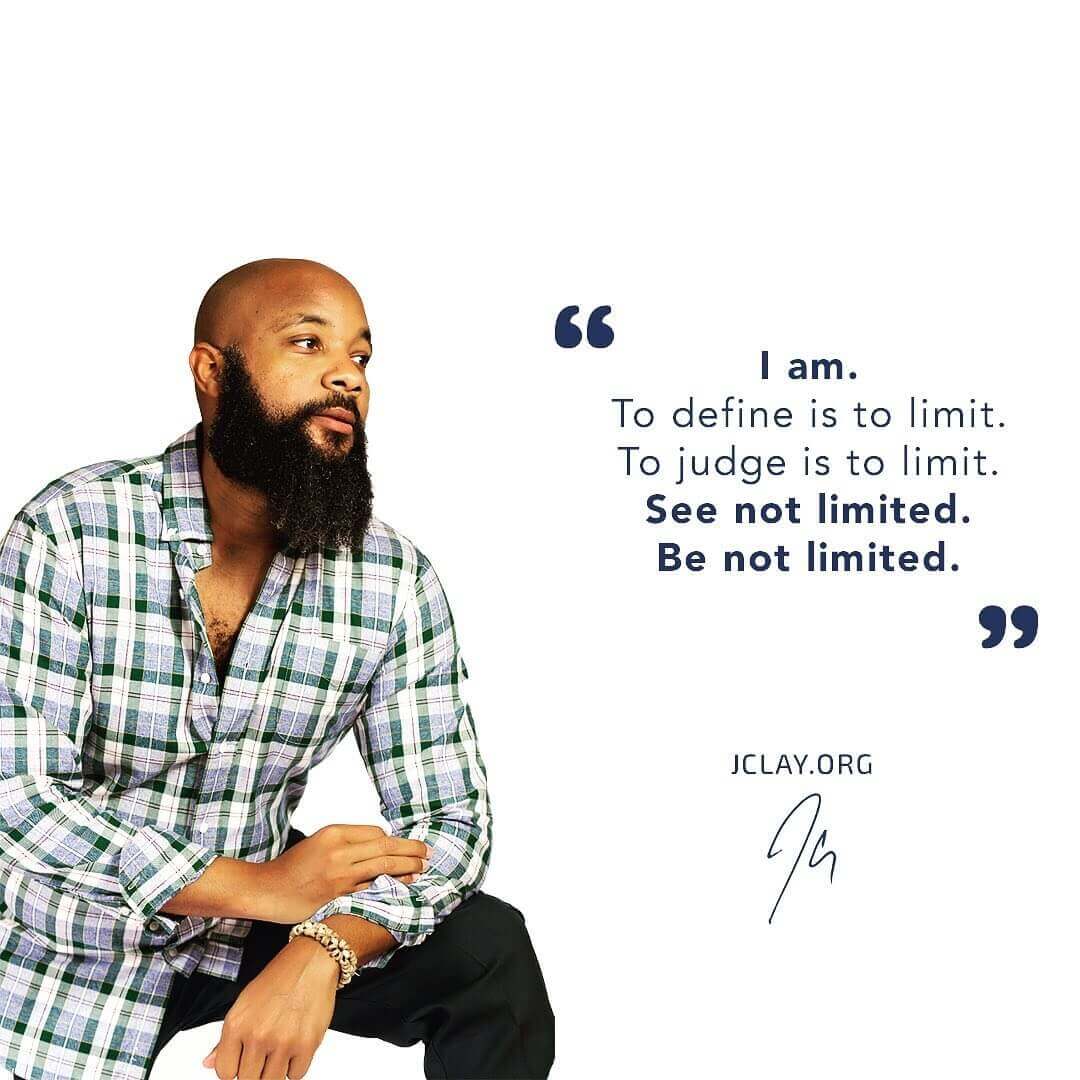
To define is to limit.
19. Why do I resist the peace and joy that ACIM promises?
You resist because you’re dumb!
I’m just playing.
The real reason?
You value pain over peace.
You still believe pain offers you something valuable, something peace can’t.
You’ve convinced yourself that pain has hidden powers.
Where does this belief come from?
Maybe it’s from how television dramatizes trauma and pain.
Think about reality TV.
They highlight a contestant’s past suffering as if to say, “They deserve to win because they’ve been through so much.”
Or maybe it started as a baby.
When you cried, someone likely came to comfort you.
You learned that pain brought attention and love.
And so, when you felt a lack of love, you unconsciously manifested pain to fill that void.
But here’s the problem:
What happens when that no longer works?
You try again.
And again.
You manifest more pain, thinking this time it will work.
But when will it be enough?
Let it go.
It’s not doing you any favors.
Peace is waiting.
And it doesn’t require pain to prove you’re worthy of it.
20. Is it possible to truly awaken while still engaging with the demands of the material world?
Many answers reveal themselves in the way the questions are asked.
For instance:
What isn’t real cannot possibly make demands.
Have you ever seen a kadabulabapoo demand anything?
No.
Because kadabulabapoos don’t exist.
(And yes, I just made up that word.)
Here’s another twist:
You ask if it’s possible to awaken.
But truly, it’s not possible to fall asleep.
You only made yourself believe you did.
The truth is, you’re already far more aware of your wokeness than you give yourself credit for.
The game of giving your power to perceived outside forces is nearing its end.
You’re growing tired of it.
It was fun for a while.
New, different, even exciting.
But what isn’t real isn’t meant to last.
Because it never was.
So, here’s your next step:
Receive your power back.
Empower those around you.
See everyone as empowered, and you will not be separate from what you see.
Awakening isn’t somewhere you’re going. It’s who you’ve always been.
Conclusion: Living the Questions, Becoming the Answer
As you’ve seen, the journey through A Course in Miracles is filled with questions.
Some profound, some challenging, all transformative.
But here’s the secret:
The answers don’t live in the words. They live in you.
Every moment you choose peace over fear, love over judgment, or trust over doubt, you become the embodiment of the principles ACIM teaches.
These questions aren’t just meant to be answered.
They’re meant to be lived.
So as you move forward, keep asking. Keep reflecting. And keep choosing.
Because every time you do, you awaken to more of who you truly are:
Love itself.
What questions do you have about A Course in Miracles? Share them in the comments. I’d love to explore them with you.


 Share:

Leave a Reply